06 / Industrial Design / Human Factors
Pawssenger
An MFA thesis exploring pet air travel through owner interviews, journey mapping, spatial mock-ups and an adaptable carrier concept.
Design question
How might the experience of flying with pets be improved while addressing the feasibility and safety questions of long-distance travel?
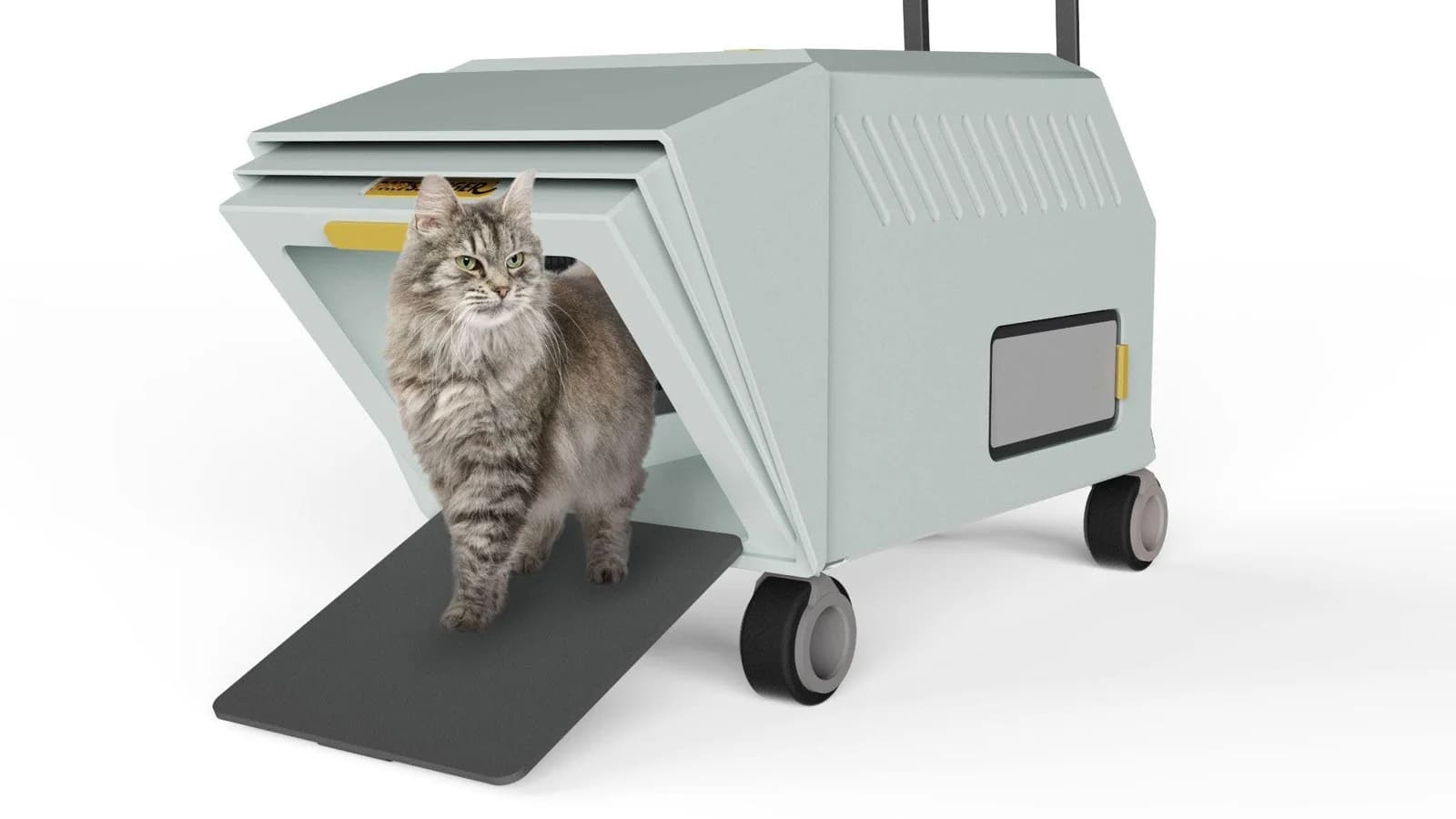
The thesis began with both in-cabin and cargo journeys, then developed a multifunctional carrier concept. Comfort, portability and owner access guided the design; improved animal welfare and travel safety remain aims to evaluate.
Understanding the journey
Face-to-face interviews explored pet owners’ past travel experiences, preparation, in-flight behaviour, concerns and expectations. A ten-question guide covered pet ownership, reasons for travel, preparation, incidents and perceived suitability for flying. Secondary research considered travel policies, aircraft space and pet transport concerns in the thesis’s historical context.
The research developed in two stages. I first interviewed 10 participants to explore their experiences and establish the initial research direction. Later, those same 10 participants and 6 additional participants provided suggestions in response to the design, helping refine the design and research direction. This involved 16 unique participants across the two stages, with the original group returning for follow-up.
Two journey maps traced cabin and cargo travel from preparation and airport transfer through arrival. The reported themes included constrained space for pets and owners, carrying effort, limited visibility of pets travelling in cargo, and a desire for easier access and monitoring. These are owner-reported concerns rather than direct measures of animal stress.
From travel scenarios to physical form
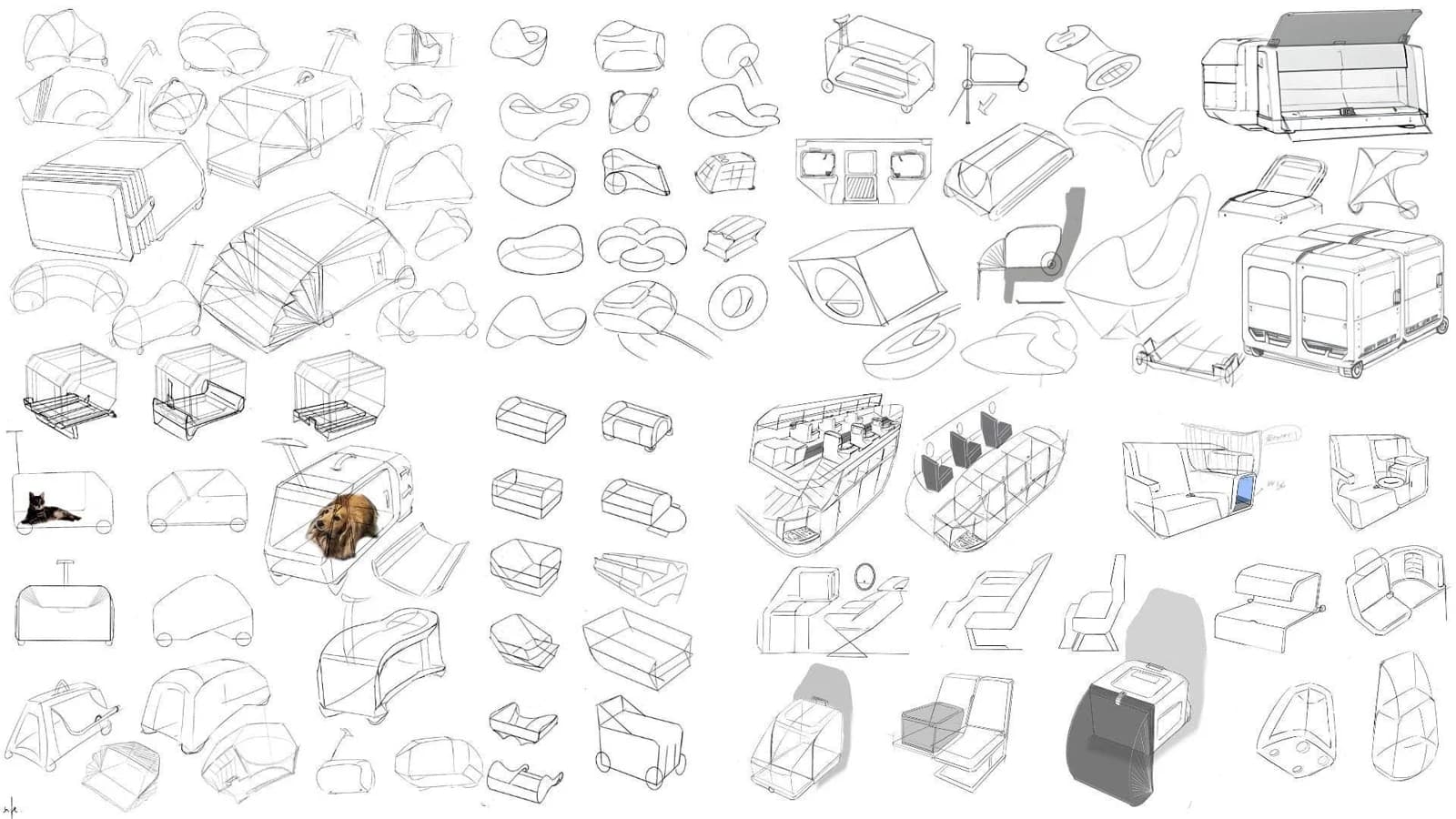
I generated 35 sketch ideas across travel stages, exploring carrier forms, expandable compartments, removable wheels, luggage integration and cargo concepts. The Boeing 777 became the reference setting for spatial exploration.
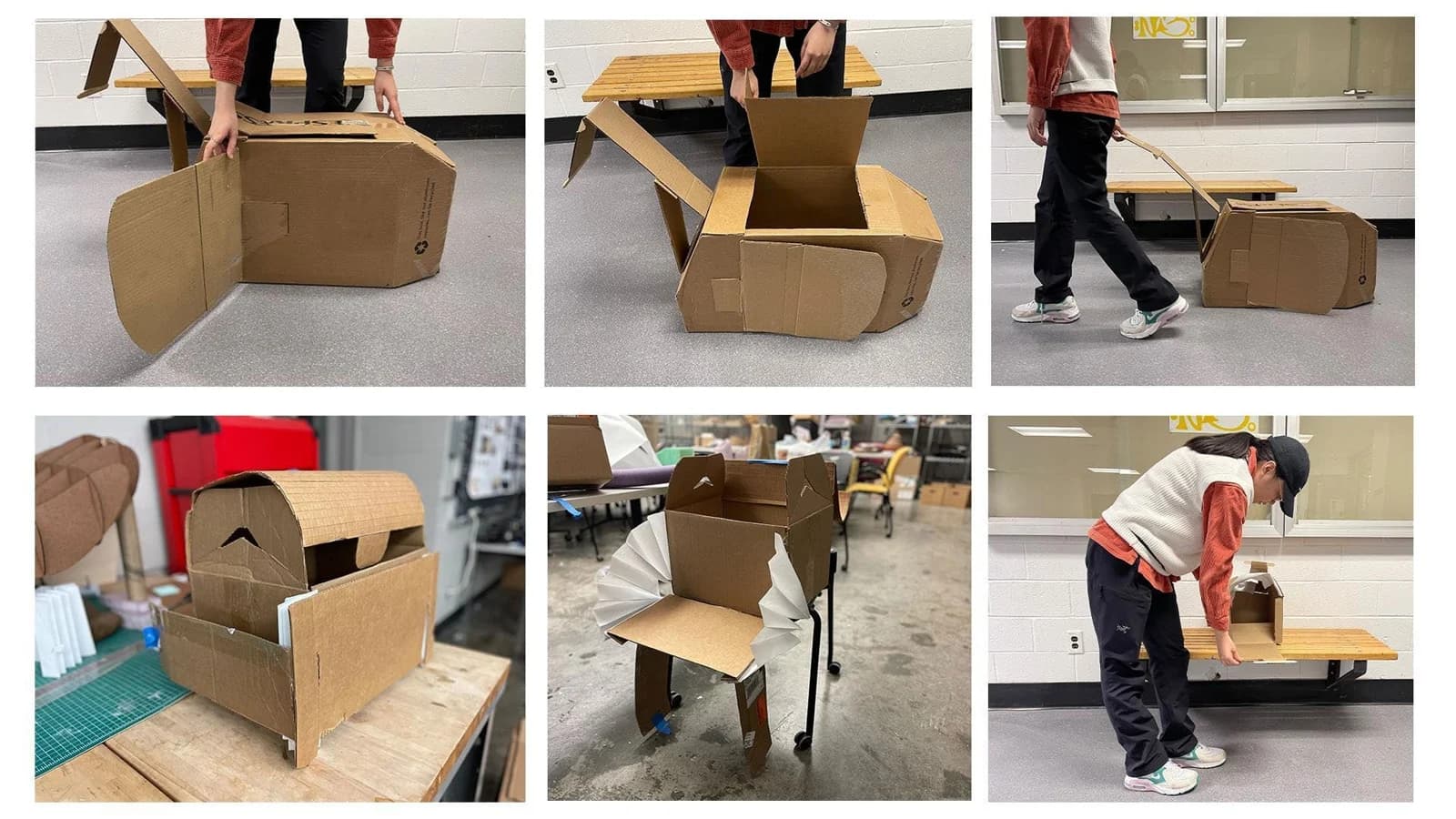
Existing chairs and cardboard mock-ups simulated seating and aisle space to investigate carrier width, length and handling. These were workshop approximations, not tests in an operational aircraft. Physical models then helped explore carrying, wheeled movement, opening and expansion.
Sketches & rough prototypes
What the prototype feedback supports
The thesis describes user evaluations of physical models. Reported feedback favoured wheeled transport and an expandable form, while highlighting the practical challenge of moving a carrier alongside other luggage. This feedback informed concept refinement.
The later design-feedback stage involved 16 participants, including the original 10 interviewees. The available documentation does not specify which participants evaluated each physical model, the tasks they performed, comparison conditions or raw observations. Although the thesis describes wheeled handling as convenient and strain-reducing, it does not provide measurements of effort, validated ergonomic gains or a formal usability result. The evidence supports formative design feedback.
Proposed carrier features
- Retractable wheels and a handle for moving between daily use and travel.
- An expanding rear panel and side access opening to explore more space and owner interaction.
- Seat attachment straps and a light-blocking enclosure as proposed approaches to positioning and comfort.
- Air purification, heart-rate and oxygen-level monitoring as proposed features; the thesis does not establish working systems or validated measurements.
- Easy-clean surfaces and replaceable cleaning materials as maintenance intentions, without documented material-performance or environmental testing.
Outcome & next steps
The outcome is a carrier concept supported by sketches, workshop models, renderings and reported user feedback. The thesis was submitted on May 7, 2024. It does not document airline approval, certified restraint performance, veterinary testing, verified ventilation or monitoring performance, or a production-ready product.
Seat placement is part of a future design scenario, not guidance on permitted airline use. Aircraft compatibility, restraint integrity, animal welfare, materials, monitoring functions and operational feasibility require further evaluation with appropriate specialists and airline partners. The thesis identifies continued testing, feasibility review and manufacturing exploration as future work.
A foundation in human-centered design
Pawssenger connects my industrial design background with my current research practice: understanding an experience across stages, identifying constraints, and using physical prototypes to make design questions tangible. The progression from interviews to journey mapping and making remains central to how I approach people’s experiences of objects and environments.