04 / Exhibition Design / Interpretation
Minds vs. Machines: Which One Was AI?
A split-authorship exhibition inviting visitors to consider interpretation, curatorial authority and trust before learning which narrative was written by AI.
Research & design question
How can museums use AI critically and transparently without eroding curatorial authority or visitor trust?
The project asks how visitors might compare human- and AI-authored interpretation while retaining clarity, agency and engagement.
Context
Created for University of Toronto Faculty of Information students and faculty, the exhibition considers AI as a force that shapes interpretation and the institutional voice.
Exhibition concept
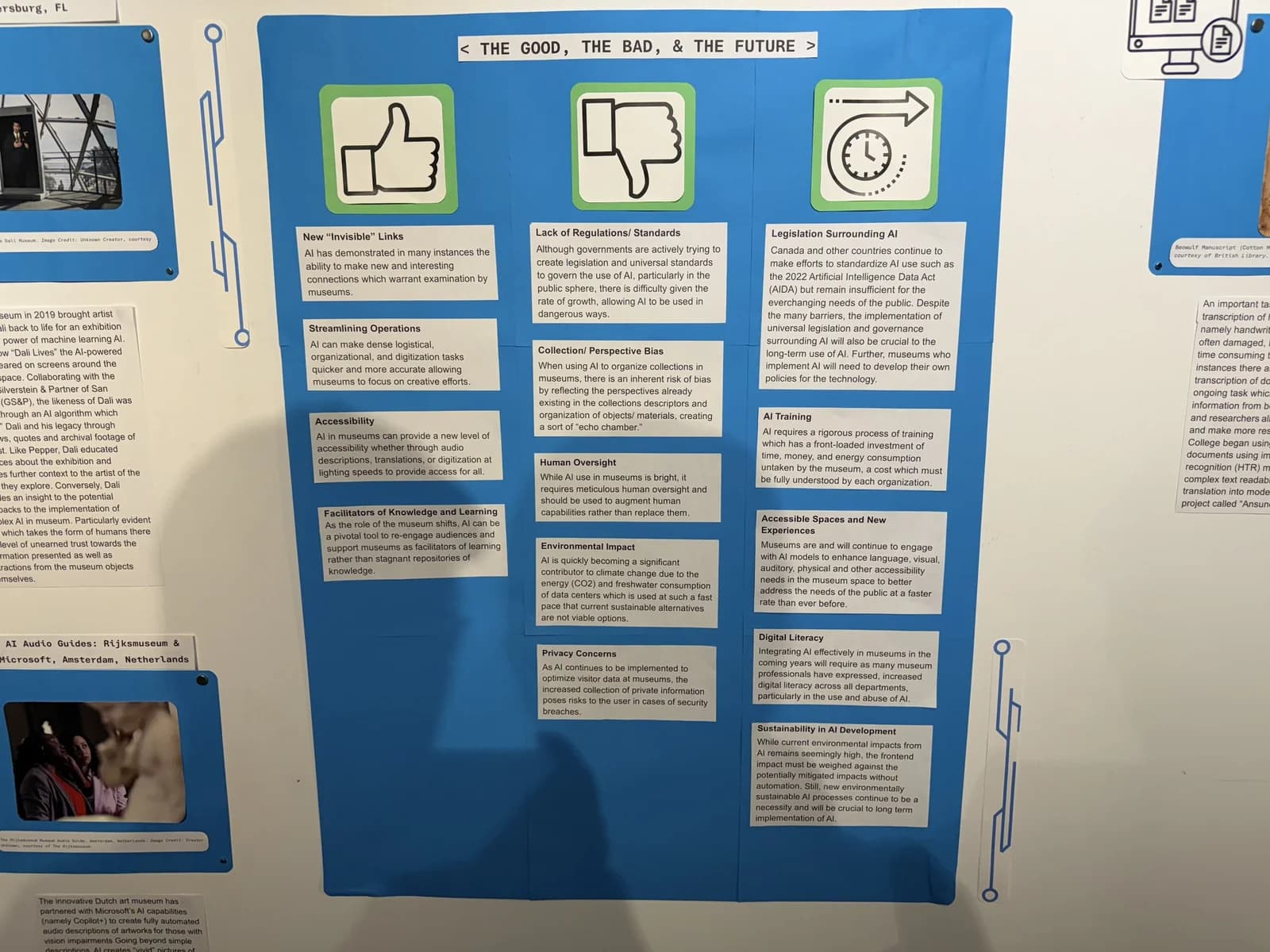
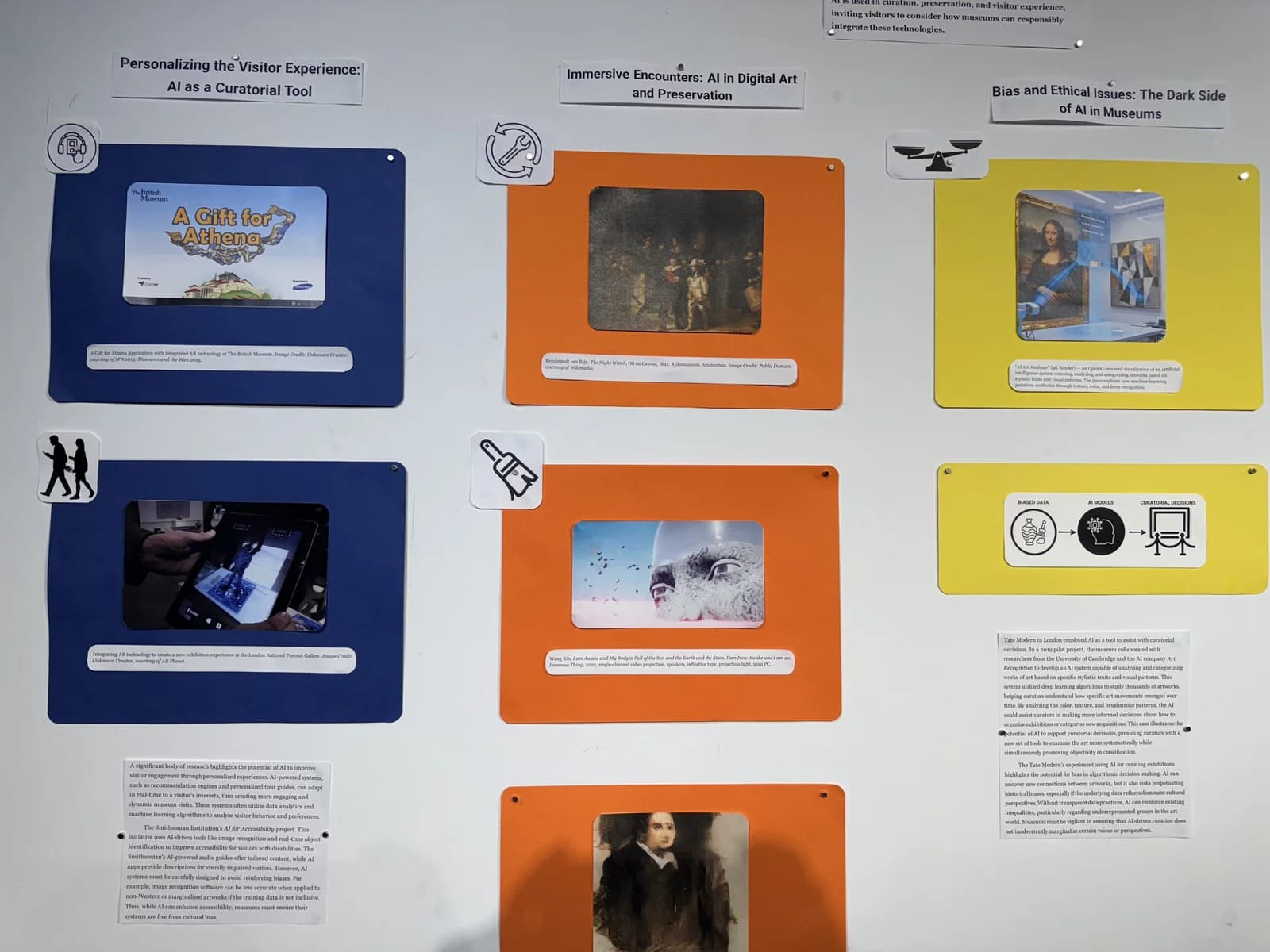
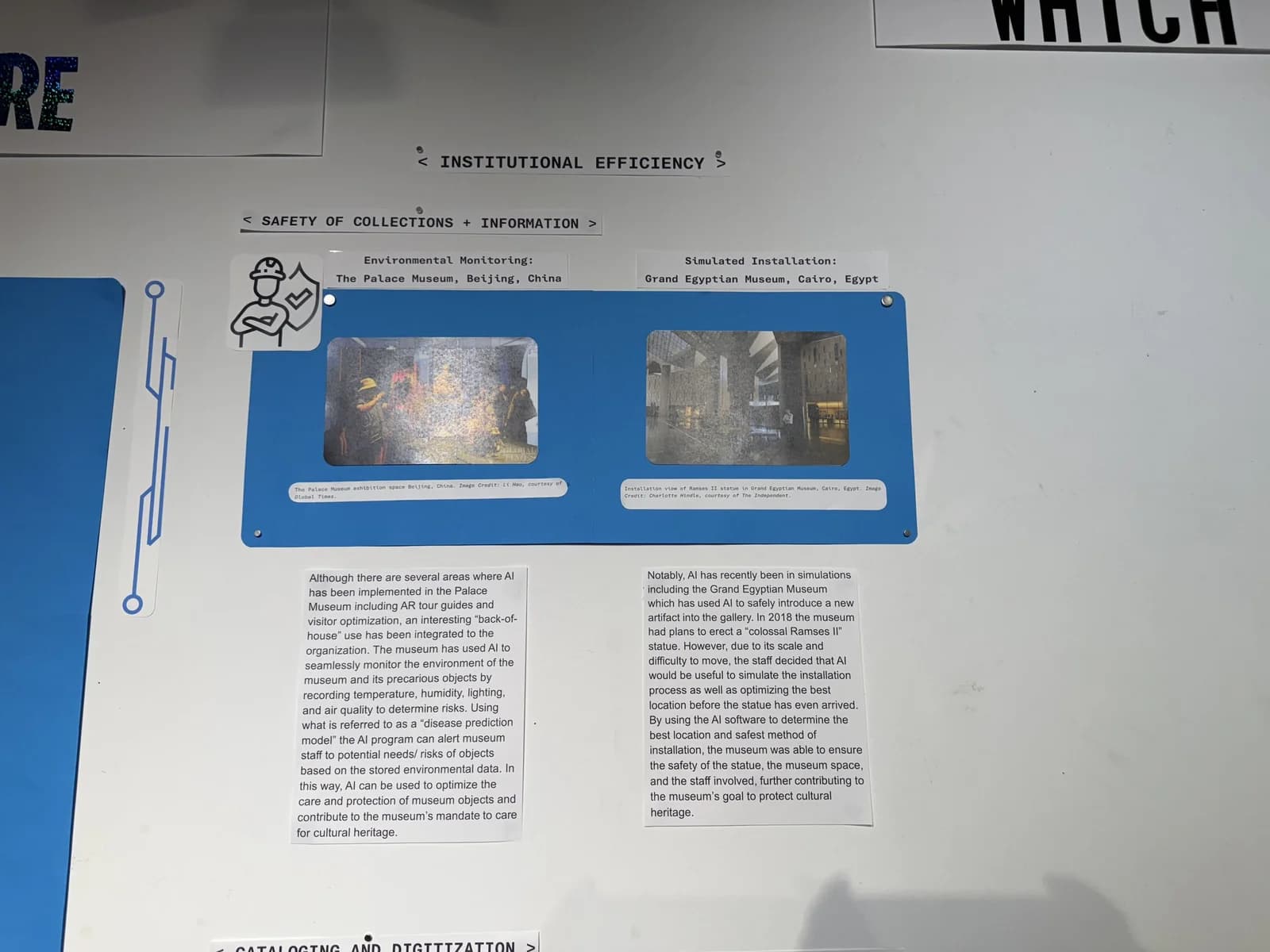
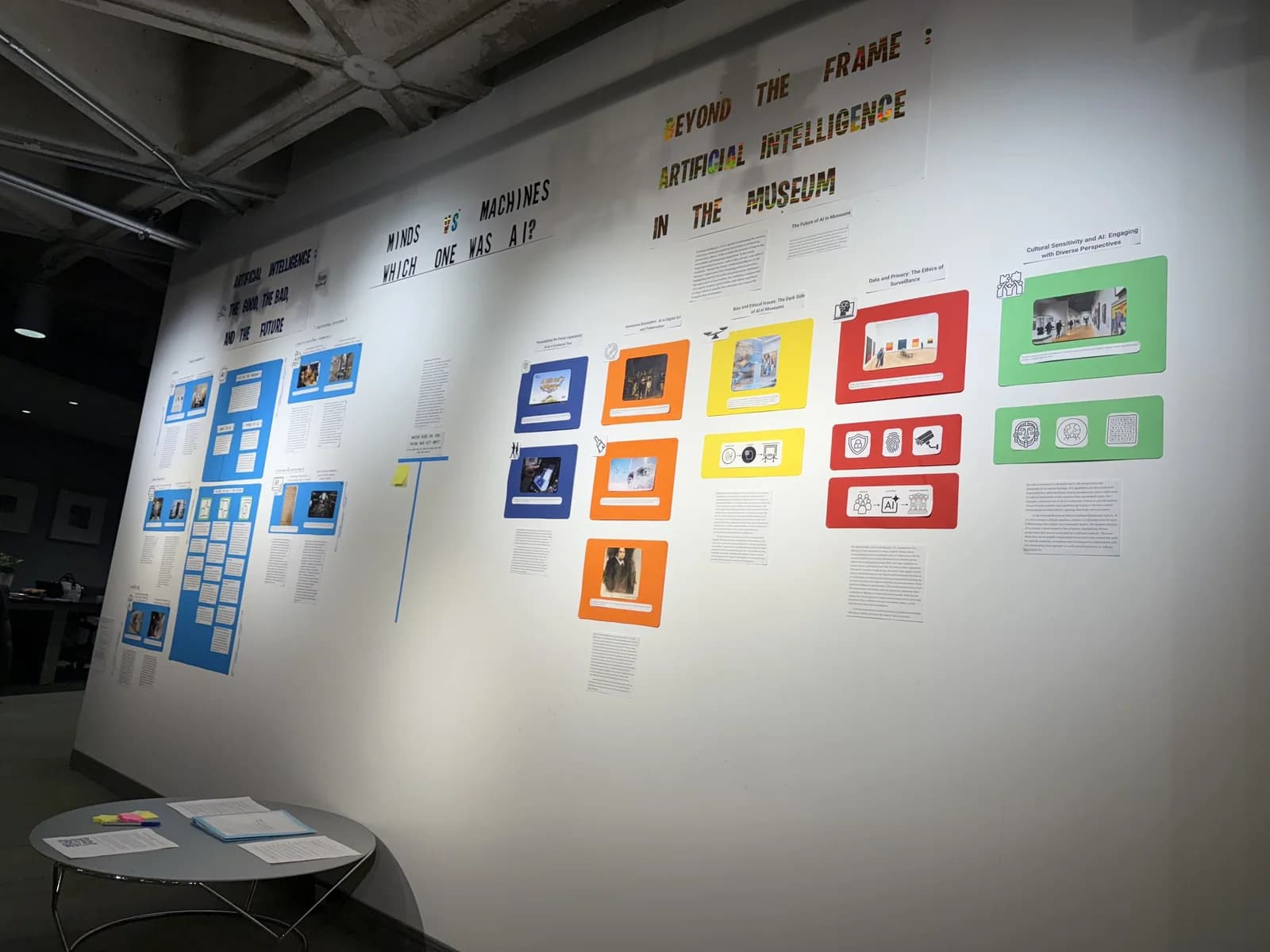
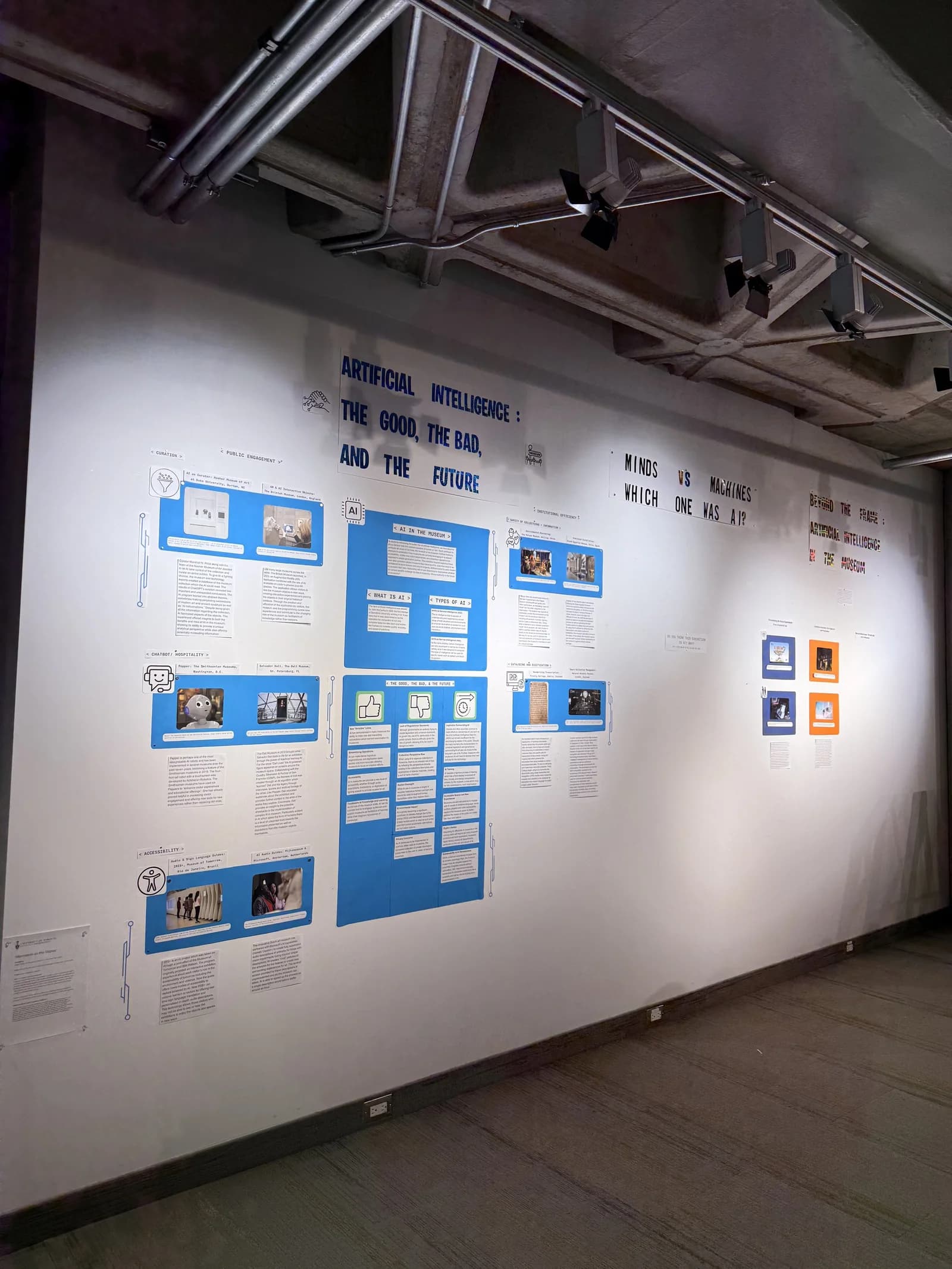
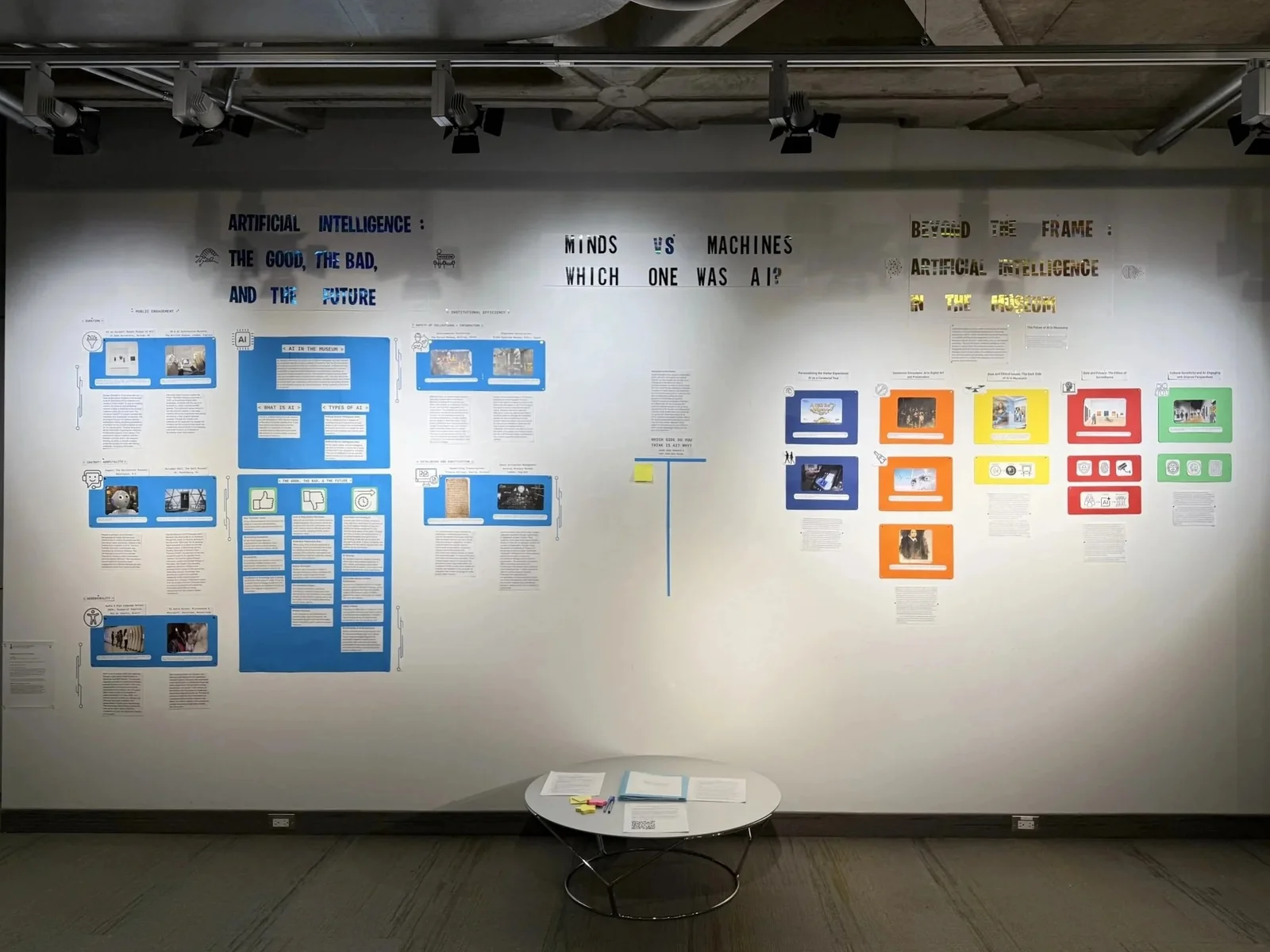
The team researched and wrote an exhibition about AI in museums, then posed the same questions and prompts to ChatGPT to create a parallel exhibition. Visitors were invited to compare perspectives, content and visual appeal before deciding which was human-written.
The human-created statement, “Artificial Intelligence: The Good, the Bad, & the Future,” asks visitors to weigh the benefits and risks of AI in museums. The AI-created “Beyond the Frame: Artificial Intelligence in the Museum” frames applications in curation, preservation and visitor experience alongside ethical concerns. These are curatorial framings, not independently evaluated claims about those technologies.
Visitor experience & interpretive sequencing
The team mapped four proposed pathways to compare disclosure timing, interpretive sequencing and visitor decision points before finalizing the layout.
The selected approach used visitor-directed, layered disclosure. A folder on the exhibition table contained the authorship answer, the team’s process conclusions and the full AI conversation transcript. Visitors could compare and guess first, then open the folder and choose how deeply to explore the process.
Concealing the answer was intended to encourage closer viewing while leaving the timing and depth of engagement to visitors. The statement explains this design rationale; it does not establish how visitors actually used the folder.
Experience mapping
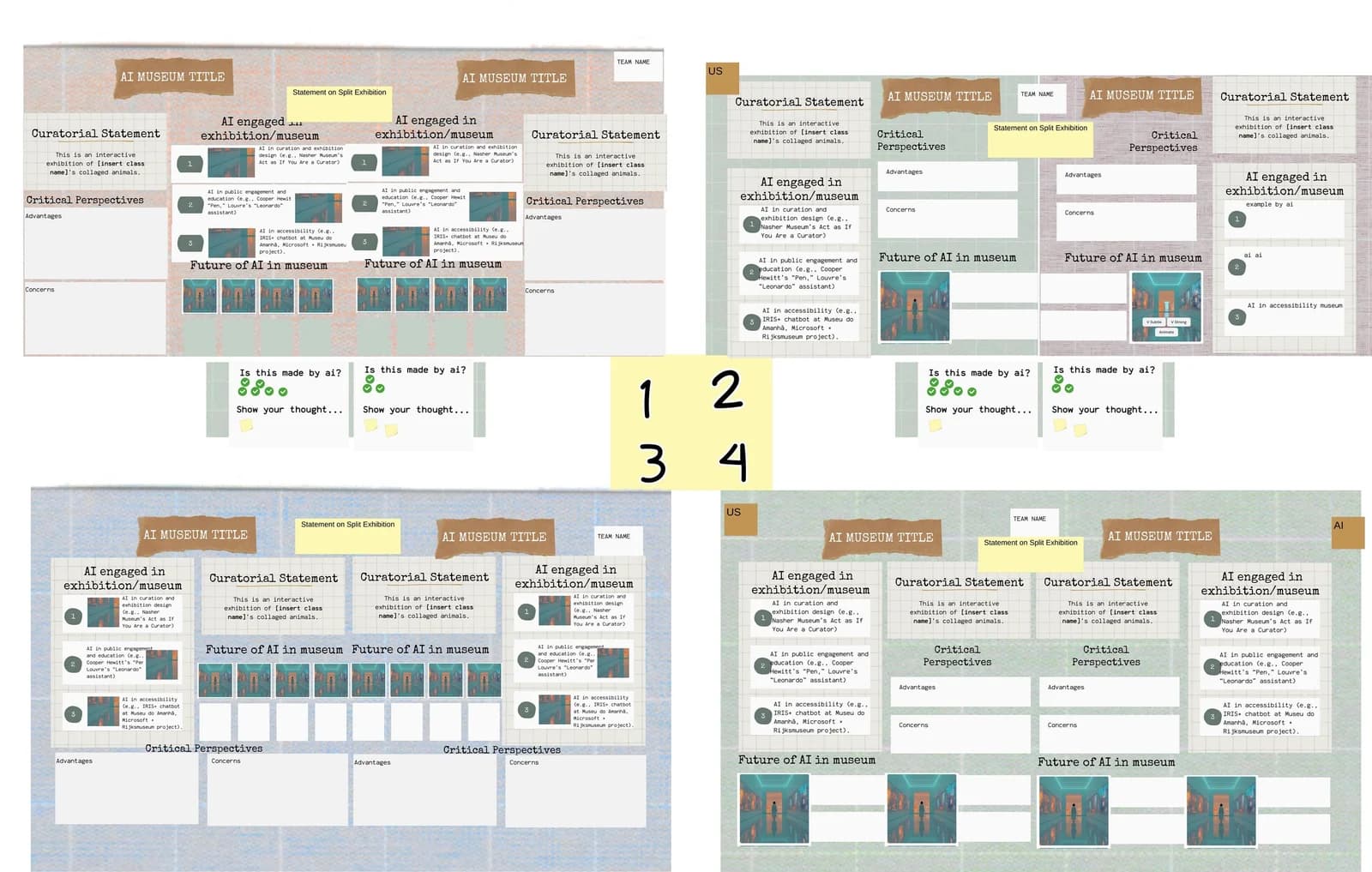
Read image description: Experience mapping and interpretive flow design for a split-authorship exhibition. A description of all four proposed layouts is available below.
This planning board compares four split-exhibition layouts, numbered 1–4. Each places two parallel narratives about AI in museums beside one another. Repeated content areas are a curatorial statement, examples of AI in exhibitions and museums, critical perspectives with advantages and concerns, and the future of AI in museums.
Layout 1 places the curatorial statements and critical perspectives on the outer edges, with numbered AI examples and future imagery in the middle. Two response areas below ask whether the content was made by AI and invite visitors to share their thoughts.
Layout 2 stacks a curatorial statement and AI examples at each outer edge, with critical perspectives and future imagery nearer the centre. The same two response areas sit below.
Layout 3 brings the curatorial statements toward the centre, places AI examples at the outer edges, and positions future imagery above critical perspectives along the bottom.
Layout 4 marks the left narrative “US” and the right “AI.” Curatorial statements and critical perspectives occupy the centre, examples occupy the outer edges, and future imagery runs along the bottom.
All four layouts include a central statement explaining the split exhibition. Example topics include curation and exhibition design, public engagement and education, and accessibility. Labels and sample text are planning placeholders. The board shows alternatives, not evidence of visitor responses or the final installed layout.
A challenge in AI-assisted exhibition making
The team began with preparatory prompts asking for case studies and scholarship on positive and negative uses of AI in museums. In the first trial, the final preparatory question concerned environmental impact; the resulting exhibition centred on that topic.
For the second trial, the team revised the final prompt to explicitly request the range of topics discussed throughout the session. The statement describes the result as more balanced. This is the team’s assessment of two iterations, not a controlled comparison of AI performance.
Reflection & evidence
The exhibition invited iSchool students and faculty to reflect on their own use of AI and its implications for emerging museum professionals. The split format made authorship and interpretive authority part of the experience itself.
Selected documentation