Minds vs. Machines: Which One Was AI?
Pop-Up Exhibition · Museum Visitor Experience · 1 Week · 2025
Role: Co-Curator, Exhibition Designer
Team: 5 people
Duration: 1 week
Format: Pop-up / temporary exhibition
Audience: Faculty of Information (UofT) students & faculty
Core Question:
How can museums use AI critically and transparently without eroding curatorial authority or visitor trust?
As AI becomes more embedded in museum workflows, questions of authorship, authority, and ethical responsibility are no longer just theoretical. This exhibition aims to help emerging museum professionals critically view AI not merely as a convenience tool but as a curatorial force that shapes interpretation, trust, and the institution's voice.
Why this exhibition?
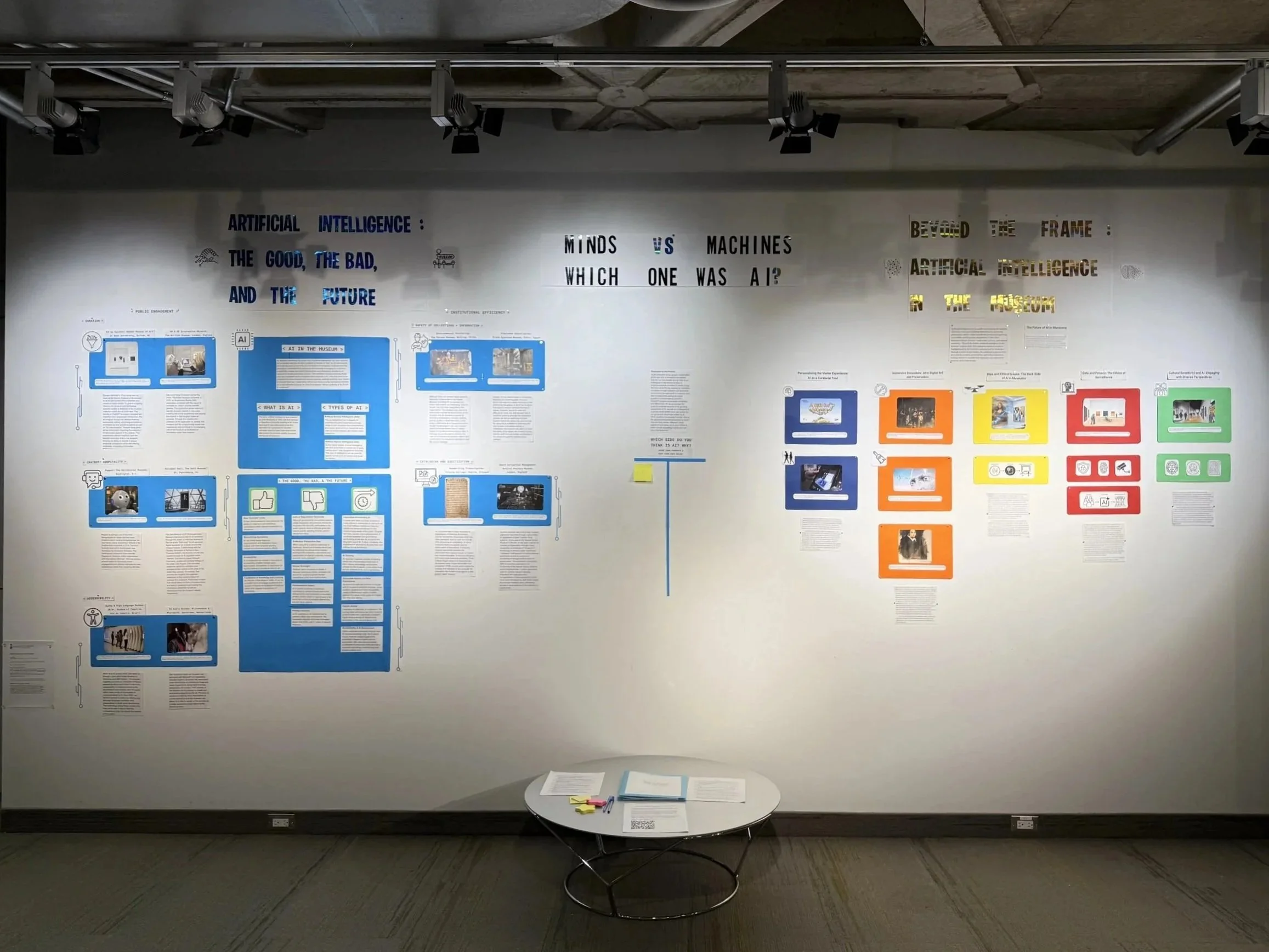
Exhibition Concept
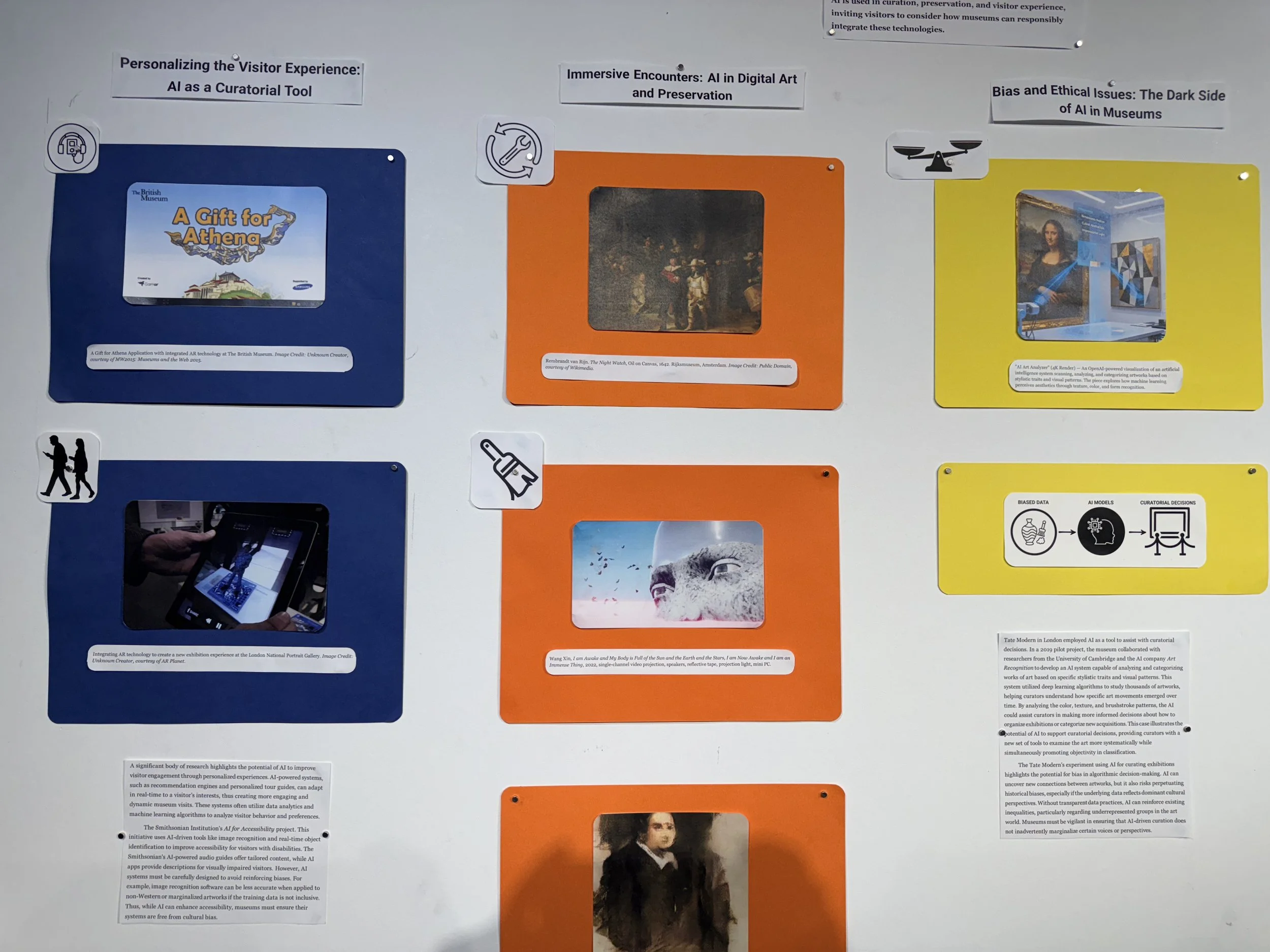
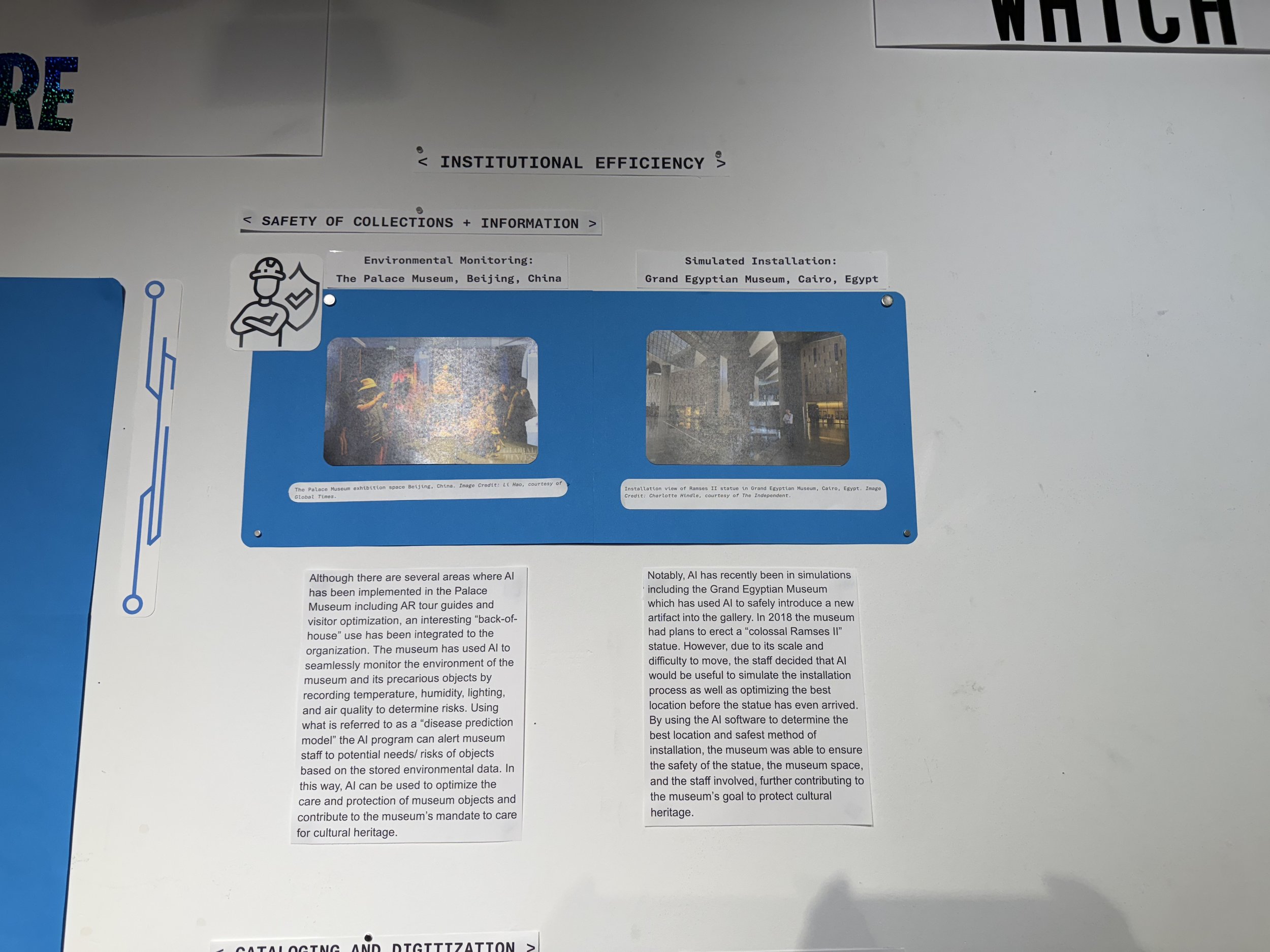
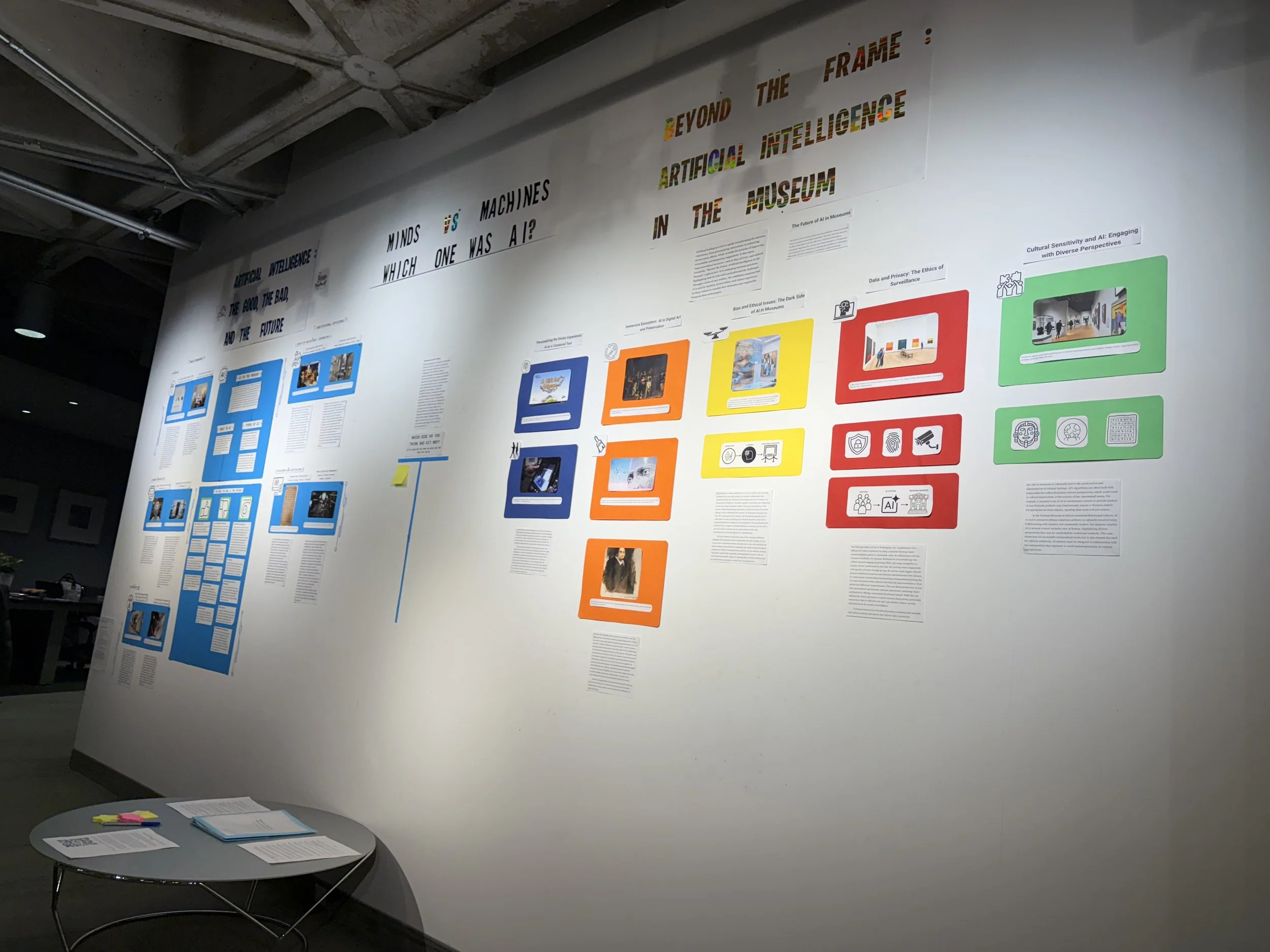
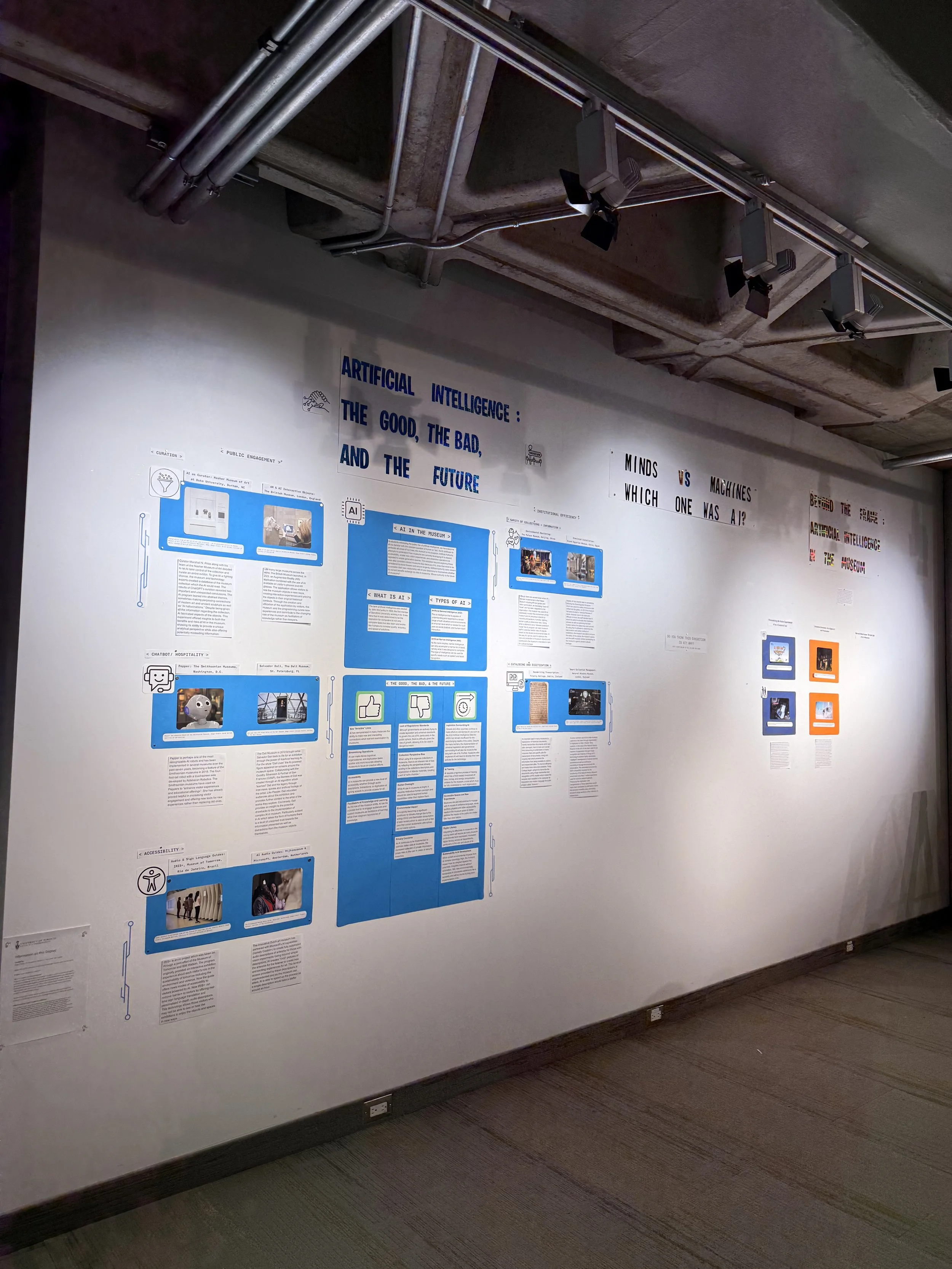
The exhibition presented two parallel curatorial narratives
one written by the team
one generated by AI
without revealing authorship upfront, inviting visitors to evaluate credibility, tone, and authority through close reading.
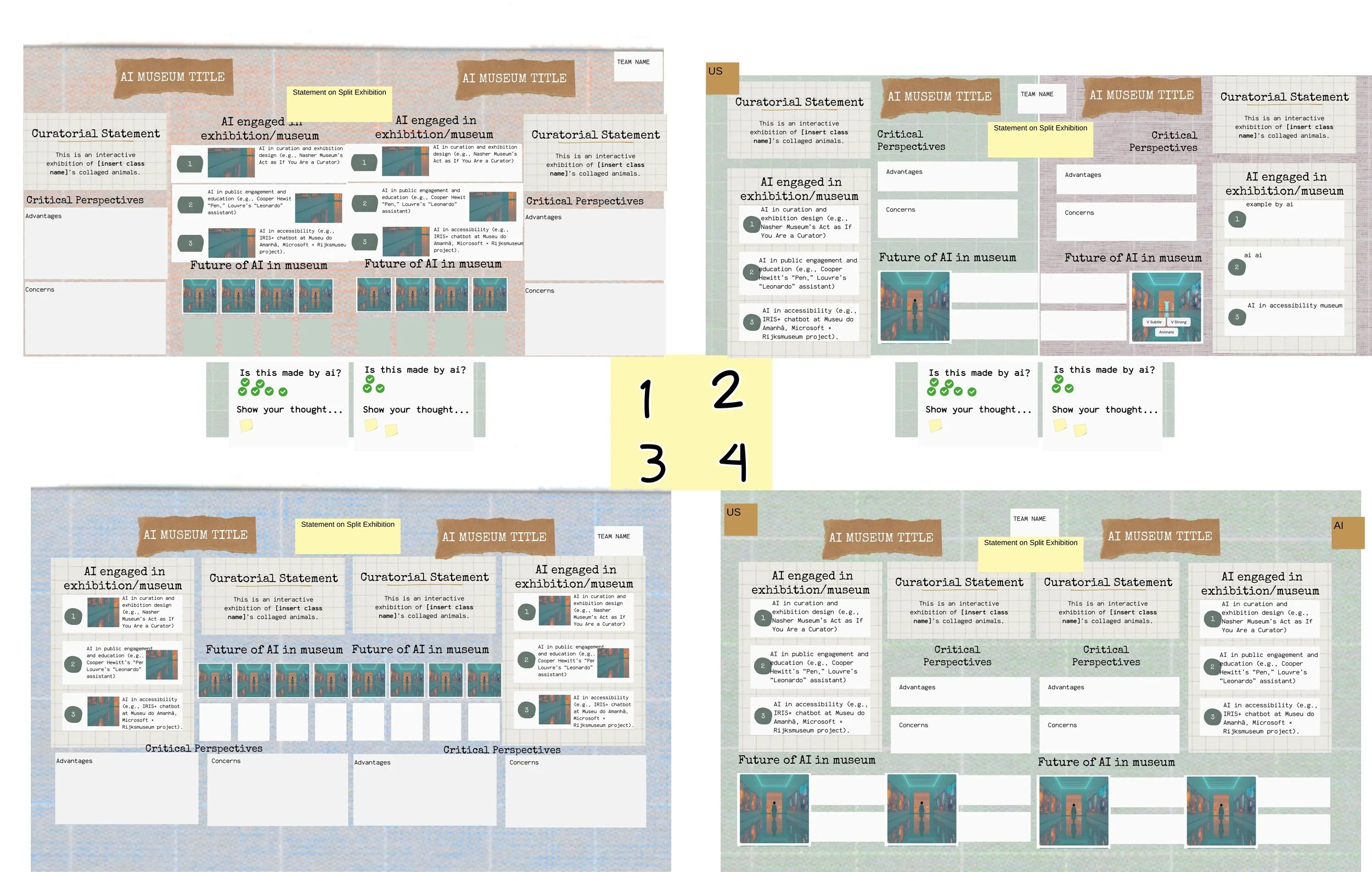
Visitor Experience & Interaction Flow
This diagram maps four proposed visitor experience pathways for a split exhibition comparing human-written and AI-generated curatorial texts. It was used internally by the team to evaluate interpretive sequencing, disclosure timing, and visitor decision points before finalizing the exhibition layout.
Experience mapping and interpretive flow design for a split-authorship exhibition
Design Question
How might visitors meaningfully compare human and AI-authored interpretation without immediately revealing authorship, while maintaining clarity, agency, and engagement?
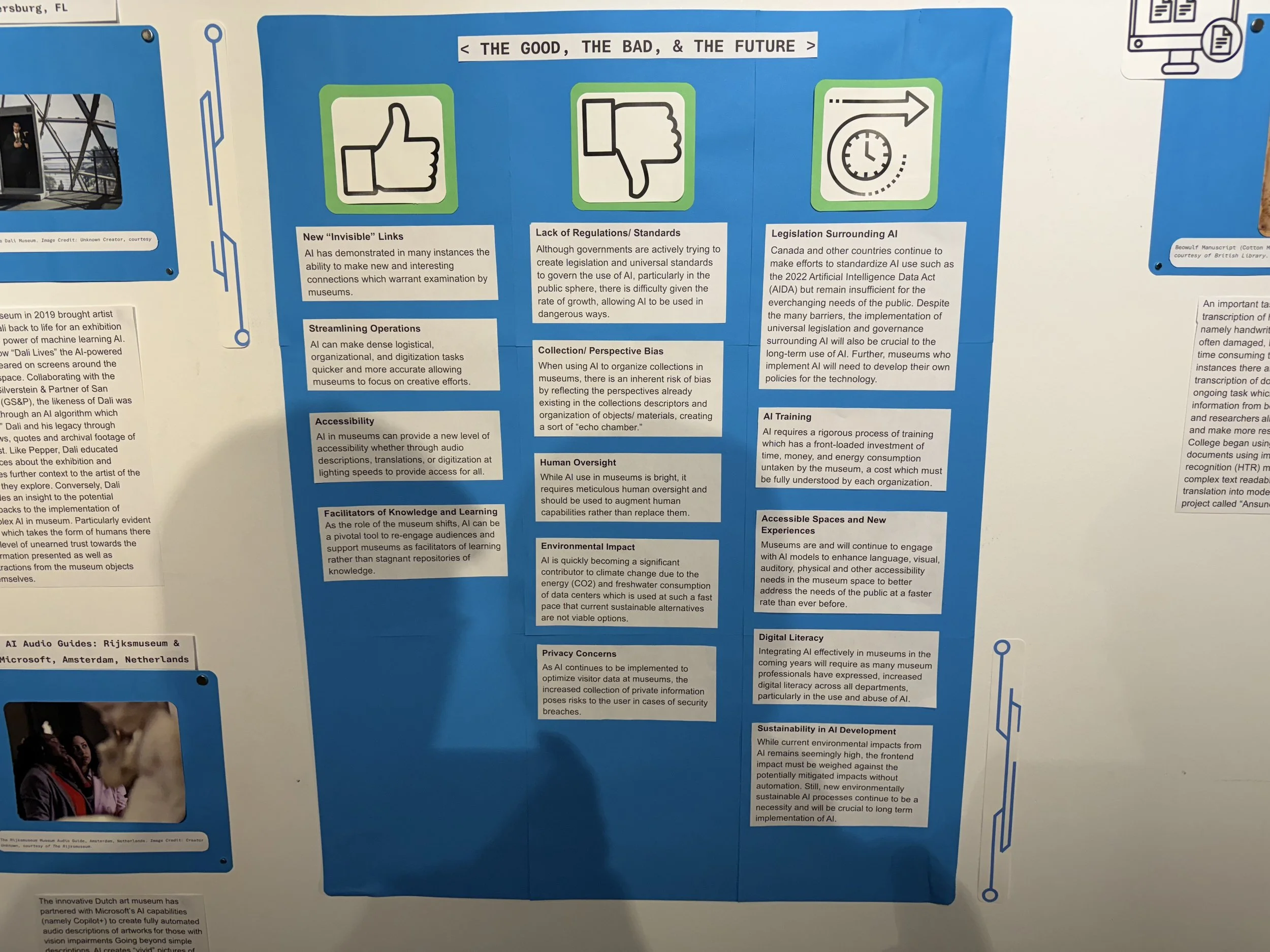
Curatorial Insight:
Delaying authorship disclosure boosted visitors' confidence in their judgment and transformed the exhibition from a quiz-like experience to a more reflective one.
Experience Strategy
Our team selected a visitor-directed, layered disclosure flow that delayed the revelation of authorship until after close reading. This approach prioritized visitor agency and encouraged critical evaluation of tone, authority, and trust before confirming whether the text was human- or AI-generated.